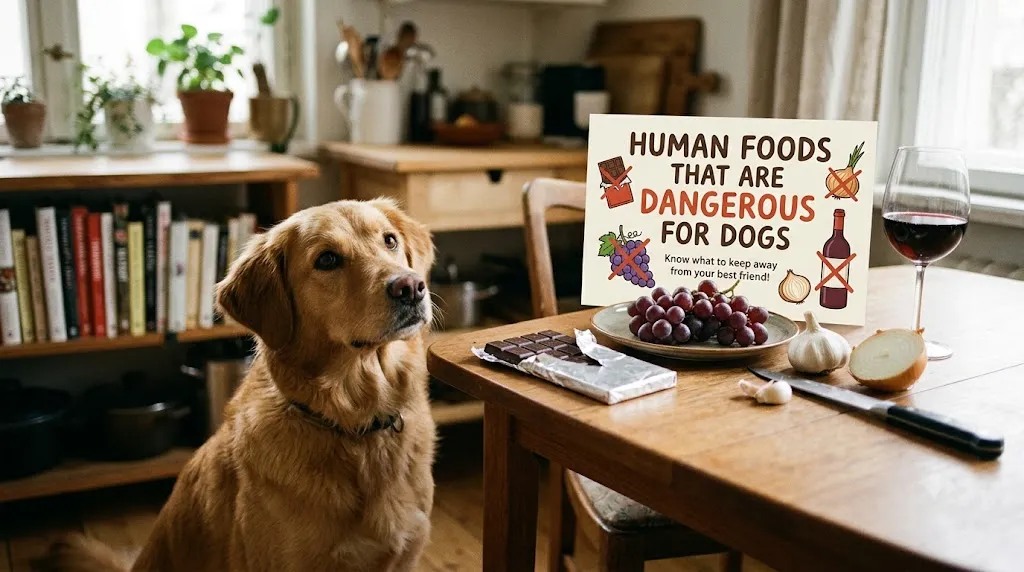
Sharing dinner with your dog can feel like an act of love. Those big brown eyes are hard to resist. But not every food on your plate belongs in your dog’s bowl. Some ordinary kitchen items are genuinely toxic to dogs, even in small amounts. Knowing which human foods are dangerous for dogs can help you avoid an emergency vet visit and keep your best friend safe for years to come.
This guide walks through the most common culprits, the warning signs of poisoning, and what to do if your dog eats something they shouldn’t. We’ll also point you toward safer alternatives, including guidance on how to choose the right dog food so treat time never turns into an emergency.
Why Some Human Foods Are Dangerous for Dogs
Dogs process food differently than people do. Their livers and kidneys break down certain compounds far more slowly. What passes through your system without a problem can build up to toxic levels in a dog’s bloodstream.
Body size also plays a role. A small dog can be poisoned by an amount of food that barely affects a large breed. Age and existing health issues matter too. Puppies, seniors, and dogs with sensitive digestion face higher risks from the same exposure.
This is why understanding human foods that are dangerous for dogs isn’t optional information. It’s a basic part of responsible pet ownership, right alongside grooming and exercise.
Common Human Foods That Are Dangerous for Dogs
Below are the foods that show up most often in poison control calls. Some cause mild stomach upset. Others can be fatal within hours.
Chocolate and Caffeine Are Dangerous Human Foods for Dogs
Chocolate contains theobromine and caffeine, two stimulants dogs cannot metabolize efficiently. These compounds affect the heart and nervous system. Dark chocolate and baking chocolate are the most dangerous because they contain the highest concentration of theobromine.
Symptoms include vomiting, restlessness, an elevated heart rate, and tremors. In severe cases, chocolate poisoning can lead to seizures. According to the Pet Poison Helpline, even small amounts of dark chocolate can be dangerous for a small dog. Coffee grounds, energy drinks, and tea also contain caffeine and should be kept out of reach.
Grapes and Raisins: Toxic Human Foods for Dogs
Grapes and raisins are among the most unpredictable human foods that are dangerous for dogs. Researchers still don’t know the exact toxic compound. What is clear is the outcome: acute kidney failure, sometimes after just a few grapes.
Because there is no known safe amount, the best approach is total avoidance. This includes grape juice, raisin bread, and trail mix that contains dried fruit.
Onions, Garlic, and Chives
Members of the allium family, including onions, garlic, leeks, and chives, damage a dog’s red blood cells. This can lead to a condition called hemolytic anemia. Cooking does not remove the toxic compounds, so sautéed onions in leftovers are just as risky as raw ones.
Watch for pale gums, weakness, and dark urine in the days following exposure. Garlic is more concentrated than onion, so even small amounts of garlic powder in seasoned food can add up over time.
Xylitol in Sugar-Free Products
Xylitol is an artificial sweetener found in sugar-free gum, candy, peanut butter, and some baked goods. It triggers a rapid insulin release in dogs, causing blood sugar to crash. This can happen within thirty minutes of ingestion.
Left untreated, xylitol poisoning can cause liver failure. Always check ingredient labels before sharing peanut butter or baked treats, since manufacturers frequently reformulate products without warning.
Avocado
Avocado contains a substance called persin. Dogs are less sensitive to persin than birds or horses, but the pit and skin still pose a serious choking and blockage hazard. The high fat content in the flesh can also trigger pancreatitis, especially in dogs already prone to digestive issues.
If your dog has a sensitive stomach, it’s worth reading our guide to the best dog food for sensitive stomach dogs before introducing any new snack, including avocado.
Alcohol and Raw Yeast Dough
Alcohol affects a dog’s coordination, breathing, and blood chemistry far more severely than it affects a person. Even a small spill of beer or wine can cause serious symptoms in a small dog.
Raw bread dough poses a double danger. The dough expands in the warm, moist environment of the stomach, and the yeast produces alcohol as it ferments. This combination can cause bloating and alcohol toxicity at the same time.
Macadamia Nuts
Macadamia nuts are uniquely toxic to dogs, even though the mechanism isn’t fully understood. Symptoms typically appear within twelve hours and include weakness in the hind legs, vomiting, and a mild fever. Most dogs recover within a couple of days with supportive veterinary care, but the ingestion should never be ignored.
Salty and Fatty Table Scraps
Chips, bacon, fried chicken skin, and other fatty scraps are common human foods that are dangerous for dogs in large quantities. Excess salt can lead to sodium ion poisoning, with symptoms like excessive thirst, vomiting, and tremors.
Fatty foods, meanwhile, are a leading trigger for pancreatitis. Dogs with a history of high blood pressure face added risk from salty diets, which is why it helps to understand the connection outlined in our article on dog hypertension signs and treatment.
Signs Your Dog May Have Eaten a Dangerous Food
Symptoms vary depending on the food and the amount consumed. Some reactions appear within minutes, while others take a day or more to show up.
Common warning signs include:
- Vomiting or diarrhea
- Lethargy or sudden weakness
- Loss of appetite
- Tremors, seizures, or disorientation
- Pale gums or unusual urine color
Any combination of these symptoms after a known or suspected exposure should be treated as urgent.
What to Do If Your Dog Eats a Dangerous Human Food
Acting quickly matters more than almost any other factor in the outcome. If you catch your dog eating something on this list, don’t wait to see if symptoms appear.
Contact a Vet or Poison Control Immediately
Call your veterinarian or an animal poison control hotline right away. The ASPCA Animal Poison Control Center maintains a full list of toxic foods and can advise you on next steps based on your dog’s weight and the amount eaten. Do not attempt to induce vomiting at home unless a professional instructs you to, since some substances cause more damage coming back up.
Note the Details
Try to identify exactly what your dog ate and roughly how much. If packaging is available, keep it handy. This information helps the vet assess risk and choose the right treatment quickly.
How to Prevent Your Dog From Eating Dangerous Human Foods
Prevention is far easier than treatment. A few consistent habits in the kitchen can eliminate most emergency situations before they start.
Store Food Out of Reach
Keep countertops clear and store food in sealed containers or cabinets. Dogs are skilled counter-surfers, and trash cans with lids are a worthwhile investment. This single habit prevents a large share of accidental poisonings reported by veterinarians every year.
Educate Everyone in the Household
Children and guests often don’t realize that a small piece of chocolate or a grape can be dangerous. A quick reminder before meals or holiday gatherings goes a long way. Reviewing common pet care mistakes with the whole family can reinforce good habits year-round.
Choose Dog-Safe Treats Instead
Instead of table scraps, offer treats made specifically for dogs. Options built for gut health, like a Dinovite dog supplement for gut health, or simple, wholesome snacks such as Milk-Bone soft chewy dog treats, satisfy a dog’s craving for something extra without the risk.
Human Foods That Are Safe for Dogs in Moderation
Not every human food is off-limits. Plain cooked chicken, carrots, blueberries, and small amounts of plain rice are generally safe. Cooked, unseasoned pumpkin can even support digestion.
Ingredients like coconut oil are debated among owners, so it’s worth reading a balanced overview of the benefits of coconut oil for dogs before adding it to a bowl. The same caution applies to grains; our article on whether corn is safe and healthy for dogs breaks down the facts beyond common myths.
When introducing any new food, start with a small amount. Watch for digestive upset over the next 24 hours before making it a regular addition.
Frequently Asked Questions About Human Foods That Are Dangerous for Dogs
Owners often have follow-up questions once they realize how many everyday items pose a risk. Here are quick answers to the ones we hear most.
Can One Bite of a Dangerous Food Really Hurt My Dog?
Yes, in some cases a single bite is enough. Foods like xylitol and macadamia nuts can trigger symptoms from a small amount, especially in toy and small breeds. Larger dogs generally need to eat more before showing signs, but there is no truly “safe” bite size for the most toxic items on this list.
How Long Does It Take for Symptoms to Appear?
Timing varies widely by food. Xylitol can cause a blood sugar crash within thirty minutes. Chocolate symptoms often take six to twelve hours to fully develop. Grape and raisin toxicity can take a day or more to show up as kidney trouble, which is exactly why any known exposure warrants a call to the vet, even without visible symptoms yet.
Are Some Dog Breeds More at Risk From Toxic Foods?
Smaller breeds face higher risk because a toxic dose is reached with less food relative to their body weight. Breeds already prone to pancreatitis, like Miniature Schnauzers, also face added danger from fatty scraps. Senior dogs and those with existing kidney or liver conditions should be kept especially far away from any of the foods on this list.
Final Thoughts on Human Foods That Are Dangerous for Dogs
Learning which human foods are dangerous for dogs is one of the simplest ways to protect your pet. Most poisoning cases happen by accident, often during holidays, parties, or a quiet moment when a dog finds something on the floor.
Keep dangerous items stored away, educate your household, and choose dog-specific treats when you want to reward good behavior. If an accident does happen, act fast and contact a vet or poison control immediately. A little preparation today can spare your dog a painful emergency tomorrow, and it keeps mealtime what it should be: safe, simple, and full of tail wags.