
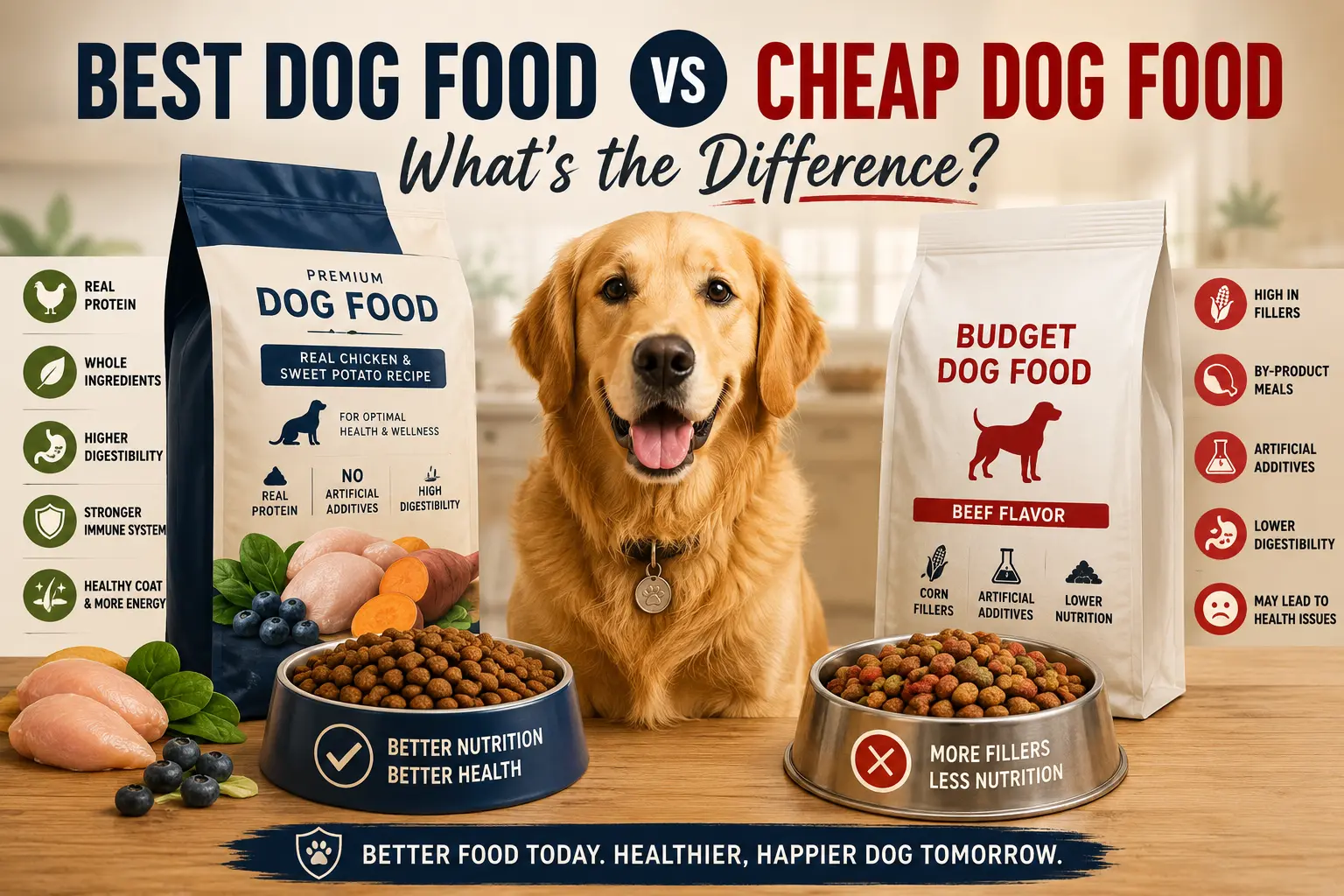

Best Dog Food vs Cheap Dog Food What’s the Difference?
You walk into the pet store and see two bags of dog food sitting right next to each other. One costs $15. The other costs $65. You stand there thinking is the expensive one really worth it, or is this just fancy packaging?
That is a question millions of dog owners across the USA ask every single day. And honestly, it is a fair one.
The truth is, the difference between the best dog food and cheap dog food goes way deeper than price. It comes down to what is actually inside the bag and how that affects your dog’s health, energy, and life in the long run.
Let’s break it all down, simply and honestly.
What Is Dog Food Quality, Really?
Before we compare, it helps to understand what “quality” actually means when it comes to dog food.
That is not just a marketing word. Quality dog food is measured by things like:
- Real protein sources: (chicken, beef, salmon not “meat by-products”)
- Digestibility: how much of the food your dog’s body can actually absorb and use
- Nutritional balance: the right mix of protein, fat, carbs, vitamins, and minerals
- AAFCO compliance: the Association of American Feed Control Officials sets minimum standards for pet food sold in the USA
Both premium and budget dog foods are required to meet basic AAFCO standards. But meeting the minimum is very different from exceeding it.
What Is Actually Inside Cheap Dog Food?
Let’s talk about what is going on in those low-cost bags.
Cheap dog food is not bad because it is cheap. It is often a problem because of how manufacturers keep costs down. And that usually means using low-quality ingredients that fill your dog’s belly without giving much real nutrition.
Common Ingredients in Budget Dog Food
Corn, wheat, and soy fillers
These are some of the most common “filler” ingredients in budget dog food. That is not to say all grains are bad but when corn or wheat is the first ingredient, it means the food is more starch than substance. Dogs are not built to live on starch.
Meat by-products
You might see “chicken by-product meal” or “meat and bone meal” on the label. These are leftovers things like beaks, feet, organs, and bones. They are not necessarily harmful, but they are far less digestible than whole meat.
Artificial preservatives and colors
BHA, BHT, and ethoxyquin are chemical preservatives found in many cheap dog foods. Some studies have raised concerns about long-term exposure, though research is still ongoing.
Low protein percentages
Budget foods often hit the minimum protein requirement but the protein sources may be harder for your dog to actually use. A dog food with 18% protein from corn gluten is very different from one with 28% protein from real chicken.
What Makes the Best Dog Food Different?
Premium dog food is not just more expensive for the sake of it (well, most of the time). There are real reasons why high-quality dog food costs more and they show up in your dog’s coat, energy levels, digestion, and overall health.
Real, Named Protein Sources
The best dog foods list a specific, named protein as the first ingredient. Think:
- Deboned chicken
- Wild-caught salmon
- Grass-fed beef
- Turkey meal
These are highly digestible, nutrient-rich protein sources that support lean muscle, organ function, and energy. That is a big deal, especially for active dogs or puppies.
Whole Fruits and Vegetables
Premium dog foods often include real fruits and vegetables things like sweet potatoes, blueberries, spinach, and carrots. These are not just fluff. They provide natural antioxidants, fiber, and vitamins that support your dog’s immune system and gut health.
No Unnecessary Fillers
High-quality dog foods skip the corn syrup, artificial dyes, and mystery meat. What you get instead is a cleaner ingredient list shorter, more recognizable, and actually beneficial to your dog.
Better Digestibility = Less Waste
Here is something that surprises a lot of pet owners: premium dog food often means your dog eats less and poops less. That is because more of the food is actually being absorbed and used. Budget food passes through quickly because a lot of it is not digestible. So you are refilling the bowl more often which offsets some of the cost difference.
Side-by-Side Comparison: Best Dog Food vs Cheap Dog Food
| Feature | Premium Dog Food | Budget Dog Food |
|---|---|---|
| First ingredient | Real named protein (chicken, beef) | Corn, wheat, or by-product meal |
| Protein source quality | High — whole meats or quality meals | Lower — by-products, plant proteins |
| Fillers | Minimal | High (corn, soy, wheat) |
| Artificial additives | Rarely used | Common |
| Digestibility | High | Low to moderate |
| Feeding amount per day | Less (more nutrients per cup) | More (less nutrition per cup) |
| Long-term health impact | Supports coat, energy, immunity | May contribute to health issues over time |
| Average price (USA) | $50–$80+ per bag | $10–$25 per bag |
Is Expensive Dog Food Really Worth It?
Here is the honest answer: it depends on the brand, your dog’s needs, and your budget.
Not every expensive dog food is automatically better. There are overpriced brands that ride on marketing. And there are solid mid-range options that offer great nutrition without breaking the bank.
But in general, yes. Investing in better dog food pays off in ways you might not notice right away but absolutely will over time.
What you may notice with better dog food:
- Shinier, softer coat
- Better breath
- Firmer, less smelly stools
- More consistent energy levels
- Fewer digestive issues like gas or loose stools
- Less scratching (often linked to food sensitivities from fillers)
What you might avoid long-term:
- Obesity and related joint problems (fillers = empty calories)
- Food allergies triggered by artificial additives
- Digestive inflammation from low-quality ingredients
- More frequent vet visits linked to nutritional deficiency
Think of it this way a vet visit in the USA can cost anywhere from $100 to $500+. If a better diet keeps your dog healthier and out of the vet’s office, it can actually save you money.
How to Read a Dog Food Label (Without Getting Confused)
You do not need to be a veterinary nutritionist to read a dog food label. Here is what to look for:
Check the First Five Ingredients
Ingredients are listed by weight. The first few ingredients make up the bulk of the food. You want to see a real protein source in that top spot.
Look for AAFCO Statement
It should say something like: “formulated to meet the nutritional levels established by the AAFCO Dog Food Nutrient Profiles.” That tells you the food meets minimum standards.
Watch Out for These Red Flags
- “Meat by-product” as the first ingredient
- Artificial colors (Red 40, Yellow 5)
- BHA or BHT in the preservatives
- “Animal digest” (vague, low-quality ingredient)
- Sugar or corn syrup listed
Check the Guaranteed Analysis
That is the section showing minimum protein %, minimum fat %, and maximum fiber %. A good adult dog food should have at least 18–25% protein (higher for puppies and active breeds).
What About Mid-Range Dog Foods?
Not everyone can afford the $70 bag of dog food every month. And that is totally okay.
There are solid mid-range dog foods in the $30–$50 range that offer real protein sources, limited fillers, and good nutritional balance. Brands in that zone can be a smart middle ground especially if you are feeding a large dog or multiple dogs.
The key is to read the label, not just the price tag.
Our Honest Take
At PetEliteCare, we believe your dog deserves to eat well because what they eat every single day shapes how they feel, how they age, and how long they are by your side.
That does not mean you need to spend a fortune. It means being smart about what goes in the bowl.
The best dog food is the one that:
- Lists a real protein as the first ingredient
- Keeps artificial additives to a minimum
- Meets or exceeds AAFCO standards
- Fits your budget without compromising your dog’s core nutrition
Cheap dog food is not always a villain. But if it is packed with fillers, by-products, and artificial preservatives, your dog is basically eating empty calories dressed up as nutrition.
Your dog trusts you to feed them well. A little label reading goes a long way.
Final Thoughts
The difference between the best dog food and cheap dog food is real and it shows up in your dog’s health over time. From the protein sources and digestibility to the presence of harmful fillers and additives, what is inside that bag matters more than the price on the shelf.
You do not have to go straight to the most expensive option on the market. But understanding what you are buying and what your dog actually needs is the first step to making a smarter, healthier choice.
Have questions about what food is right for your dog? Explore more guides at PetEliteCare and give your pup the care they deserve.