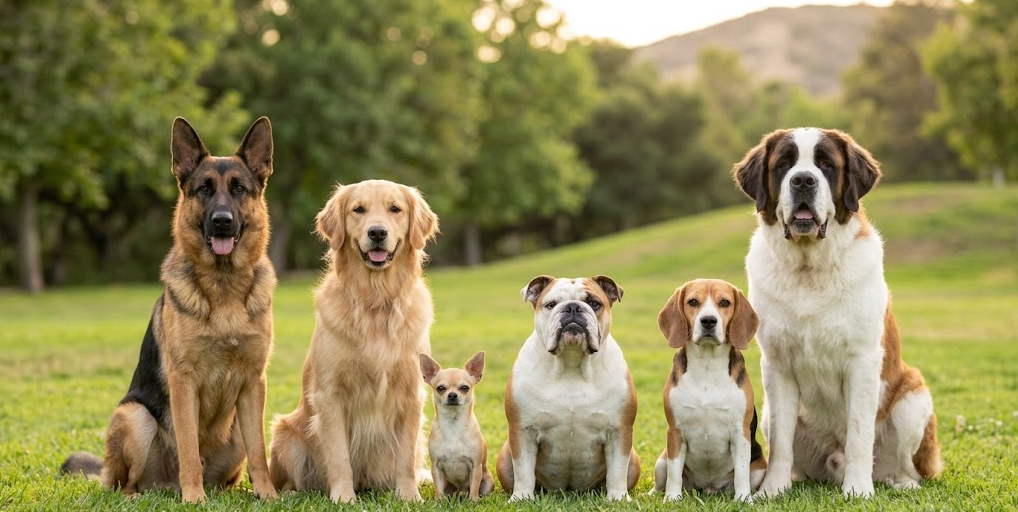
Types of Dogs – A Complete Guide
If you’re wondering about the different types of dogs available, you’ve come to the right place. Whether, you are a first-time dog owner or an experienced pet lover, knowing dog types helps you pick the right pet. In this complete guide, we cover every major dog type, their temperaments, traits, and what makes each one unique.
What Are the Main Types of Dogs?
Major kennel clubs group dogs into breeds. Examples include the American Kennel Club (AKC) and the United Kennel Club (UKC). These groups reflect each dog’s original purpose. People bred dogs for tasks like herding livestock, hunting game, or sitting in a royal lap.
The AKC recognizes 7 main types of dogs:
- Sporting Dogs
- Hound Dogs
- Working Dogs
- Terrier Dogs
- Toy Dogs
- Non-Sporting Dogs
- Herding Dogs
Let’s explore each type in detail.
1. Sporting Dogs
Sporting dogs are one of the most popular types of dogs for active families. People bred these dogs to help hunters find and retrieve game.
People know them for their high energy, intelligence, and friendly personalities.
Characteristics of Sporting Dogs
- Athletic and energetic
- Highly trainable
- Friendly and sociable with people and other pets
- Require daily exercise and mental stimulation
Popular Sporting Dog Breeds
- Labrador Retriever: The most popular dog breed groups in the United States for decades
- Golden Retriever: Gentle, loyal, and great with children
- Cocker Spaniel: Affectionate and adaptable
- German Shorthaired Pointer: Versatile hunting dog with boundless energy
- Vizsla: Known as the “Velcro dog” for their love of human contact
Best for: Active families, runners, hunters, and homes with large yards.
2. Hound Group Dogs
Hound group dogs are among the oldest types of dogs in the world. People bred these dogs to hunt by either scent or sight, which makes them exceptional trackers and sprinters.
Two Main Categories of Hound Group Dogs
Scent Hounds: Use their powerful nose to track game over long distances.
- Bloodhound
- Beagle
- Basset Hound
- Coonhound
Sight Hounds: Use their sharp vision and speed to chase prey.
- Greyhound
- Whippet
- Afghan Hound
- Saluki
Characteristics of Hound Group Dogs
- Independent thinkers
- Strong prey drive
- Can be stubborn but affectionate
- Need secure, fenced areas due to their instinct to follow scents or chase
Best for: Experienced dog owners, families with space, and those who enjoy outdoor activities.
3. Working Group Dogs
Working Group dogs are large, strong dogs bred for specific jobs. These jobs include pulling sleds, guarding property, and rescuing people. These dogs are highly intelligent and need a job to stay mentally satisfied.
Characteristics of Working Group Dogs
- Strong and powerful
- Loyal and protective
- Highly intelligent
- Need consistent training and firm leadership
- Not always ideal for first-time dog owners
Popular Working Group Dog Breeds
- Siberian Husky: Bred for endurance and sled pulling in harsh climates
- Rottweiler: A confident, powerful guard dog
- Doberman Pinscher: Alert, fearless, and fiercely loyal
- Great Dane: One of the largest types of dogs; gentle giants at heart
- Boxer: Playful, energetic, and great with families
- Saint Bernard: Famous for alpine rescue work; calm and patient
Best for: Experienced owners, those needing protection dogs, working farms, and active individuals.
4. Terrier Group Dogs
Terriers are one of the feistiest types of dogs. Breeders first bred them to hunt and kill vermin like rats and foxes. This gave them a bold, energetic personality. They can also be stubborn, and hard to ignore.
Characteristics of Terrier Group Dogs
- Bold and confident
- High energy
- Can be stubborn and independent
- Strong prey drive not always compatible with small pets
- Surprisingly affectionate with their families
Popular Terrier Breeds
- Jack Russell Terrier: Small but fearless and full of personality
- Bull Terrier: Muscular with a playful, clownish streak
- Scottish Terrier: Independent, dignified, and distinctive-looking
- Airedale Terrier: The “King of Terriers,” the largest terrier breed
- Yorkshire Terrier (Yorkie): One of the most popular small types of dogs worldwide
- West Highland White Terrier (Westie): Friendly, bold, and hypoallergenic
Best for: Owners who enjoy spirited, independent dogs with a larger-than-life personality.
5. Toy Group Dogs
Toy Group dogs are small types of dogs bred primarily for companionship. Don’t let their small size fool you. Many toy breeds have larger-than-life personalities. They often want to be the center of attention.
Characteristics of Toy Group Dogs
- Small in size but big in personality
- Ideal for apartment living
- Often lap dogs that crave human attention
- Can be feisty or assertive despite their size
- Generally lower exercise needs (though they still need daily walks)
Popular Toy Group Dog Breeds
- Chihuahua: One of the smallest types of dogs; confident and loyal
- Pomeranian: Fluffy, lively, and attention-loving
- Shih Tzu: Bred for Chinese royalty; sweet and affectionate
- Pug: Charming, wrinkly, and hilariously entertaining
- Maltese: Elegant, gentle, and hypoallergenic
- Cavalier King Charles Spaniel: Gentle, graceful, and great for families
Best for apartment dwellers, for seniors, for families without young children (since some toy breeds are fragile) and for people who want a close companion.
6. Non-Sporting Group Dogs
The non-sporting group is one of the most diverse dog groups. It includes breeds that do not fit into other groups. This group is incredibly varied in size, temperament, and appearance.
Popular Non-Sporting Group Dog Breeds
- French Bulldog: Currently one of the most popular types of dogs in the world
- Bulldog (English Bulldog): Calm, courageous, and surprisingly gentle
- Poodle (Standard): Extremely intelligent; often considered the second smartest dog breed
- Dalmatian: Iconic spotted coat; energetic and loyal
- Chow Chow: Lion-like appearance with a reserved, independent personality
- Boston Terrier: The “American Gentleman” of dogs; tuxedo markings and a friendly nature
Characteristics of Non-Sporting Group Dogs
- Highly varied temperaments and physical traits
- Ranges from high-energy to calm
- Something for every lifestyle
Best for: A wide range of owners research individual breeds within this group to find your ideal match.
7. Herding Group Dogs
Herding Group dogs are among the most intelligent types of dogs ever bred. People bred these dogs to move livestock. This gave them strong focus and easy training. They also have a natural instinct to herd, even children and other pets.
Characteristics of Herding Group Dogs
- Exceptionally intelligent
- Highly energetic: need jobs to do
- Deeply loyal and responsive to their owners
- Can develop behavioral issues without proper mental and physical stimulation
- Natural instinct to chase and herd
Popular Herding Group Dog Breeds
- Border Collie: Widely considered the most intelligent dog breed in the world
- German Shepherd: One of the most versatile types of dogs; used in police and military work
- Australian Shepherd: Energetic, agile, and brilliant
- Belgian Malinois: Elite working dog used extensively in military operations
- Shetland Sheepdog (Sheltie): Smaller version of the Rough Collie; extremely trainable
- Corgi (Pembroke Welsh Corgi): Beloved by royalty; surprisingly athletic herders
Best for: Active owners, those with land or livestock, runners, and people who want to do dog sports like agility or flyball.
Types of Dogs by Size
Beyond breed groups, many people think about types of dogs based on size. Here’s a quick breakdown:
Small Types of Dogs (Under 20 lbs)
Small dogs are popular for apartment living and make excellent companions for those with limited space.
- Chihuahua (2–6 lbs)
- Yorkshire Terrier (7 lbs)
- Pomeranian (3–7 lbs)
- Maltese (under 7 lbs)
- Shih Tzu (9–16 lbs)
- French Bulldog (under 28 lbs)
Medium Types of Dogs (20–60 lbs)
Medium-sized dogs strike a great balance, sturdy enough for outdoor adventures but manageable at home.
- Beagle (20–30 lbs)
- Cocker Spaniel (20–30 lbs)
- Border Collie (30–55 lbs)
- Australian Shepherd (40–65 lbs)
- Bulldog (40–50 lbs)
Large Types of Dogs (Over 60 lbs)
Large dogs often make excellent family pets, guard dogs, and working companions.
- Labrador Retriever (55–80 lbs)
- Golden Retriever (55–75 lbs)
- German Shepherd (50–90 lbs)
- Rottweiler (80–135 lbs)
- Great Dane (110–175 lbs)
- Saint Bernard (120–180 lbs)
Types of Dogs by Temperament
Choosing a dog based on temperament is just as important as considering size or breed group. Here are the most common temperament-based types of dogs:
Family-Friendly Types of Dogs
These breeds are known for their patience, gentle nature, and love of children:
- Golden Retriever
- Labrador Retriever
- Beagle
- Boxer
- Cavalier King Charles Spaniel
Guard Dog Types
Protective and loyal, these dogs make excellent watchdogs:
- German Shepherd
- Rottweiler
- Doberman Pinscher
- Belgian Malinois
- Bullmastiff
Low-Maintenance Types of Dogs
Perfect for busy owners or those new to dog ownership:
- Basset Hound
- Shih Tzu
- Cavalier King Charles Spaniel
- Pug
- Greyhound (surprisingly calm indoors!)
High-Energy Types of Dogs
Ideal for active owners who love exercise and outdoor adventures:
- Border Collie
- Siberian Husky
- Vizsla
- Jack Russell Terrier
- Weimaraner
Hypoallergenic Types of Dogs
For people with allergies, these breeds shed minimally:
- Poodle (all sizes)
- Bichon Frisé
- Maltese
- Portuguese Water Dog
- Schnauzer
Mixed breed dogs: Are they a type of dog?
Absolutely. Mixed breed dogs (also called mutts or crossbreeds) are one of the most common types of dogs found in homes and shelters worldwide. They do not belong to one breed group.
But they often benefit from hybrid vigor.
This can make them healthier and longer-lived than purebred dogs.
This is due to their diverse genetic background.
Popular modern crossbreeds (sometimes called “designer dogs”) include:
- Labradoodle (Labrador + Poodle)
- Goldendoodle (Golden Retriever + Poodle)
- Cockapoo (Cocker Spaniel + Poodle)
- Puggle (Pug + Beagle)
- Maltipoo (Maltese + Poodle)
How to Choose the Right Type of Dog for You
With so many types of dogs to choose from, it can feel overwhelming. Here are the key questions to ask yourself before bringing a dog home:
- How active are you? High-energy breeds like Border Collies and Huskies need hours of daily exercise. If you prefer relaxed evenings, consider a Basset Hound or Shih Tzu.
- How much space do you have? Large breeds like Great Danes need room to move. Small types of dogs thrive in apartments.
- Do you have children or other pets? Look for family-friendly breeds known for patience and gentleness.
- How much time can you give to grooming? Long-coated breeds like the Afghan Hound need daily brushing. Short-coated breeds are much lower maintenance.
- Are you a first-time owner? Some types of dogs (like Border Collies or Chow Chows) are better suited to experienced owners. Beginners do well with Labrador Retrievers, Golden Retrievers, or Cavalier King Charles Spaniels.
- Do you have allergies? Opt for hypoallergenic types of dogs like Poodles, Schnauzers, or Maltese.
Frequently Asked Questions About Types of Dogs
How many types of dogs are there?
There are over 340 recognized dog breeds worldwide according to the Fédération Cynologique Internationale (FCI), organized into 10 groups. The AKC officially recognizes 200+ breeds across 7 major groups.
What is the most popular type of dog?
The French Bulldog has been the most popular dog breed in the United States since 2022. It passed the Labrador Retriever, which was number one for over 30 years. Globally, Labrador Retrievers and German Shepherds remain among the top types of dogs by popularity.
What type of dog is best for a family with kids?
The best dog breeds for families with children include Golden Retrievers.
They also include Labrador Retrievers.
Other good choices are Beagles.
Boxers are another option.
Cavalier King Charles Spaniels are also a good choice. People know these breeds for their patience, gentleness, and love of play.
What are the easiest types of dogs to train?
The easiest dogs to train are often working and herding breeds.
These include the Border Collie, German Shepherd, Golden Retriever, Labrador Retriever, and Poodle. These breeds score highest in obedience and working intelligence.
What type of dog lives the longest?
Small types of dogs generally live longer than large breeds. The Chihuahua, Dachshund, Pomeranian, and Shih Tzu frequently reach 15–20 years. Large breeds like Great Danes typically live 7–10 years.
Are mixed breed dogs healthier than purebred dogs?
Generally yes. Mixed breed dogs benefit from genetic diversity. This often lowers the risk of inherited conditions seen in some purebred dogs. However, a healthy lifestyle, quality nutrition, and regular veterinary care matter most regardless of breed type.
Final Thoughts on Types of Dogs
Understanding the different types of dogs is the first step toward finding your perfect four-legged companion. From the energetic Border Collie to the calm Basset Hound, there is a dog for every person. A dog suits every lifestyle and every home, from the tiny Chihuahua to the tall Great Dane.
Take your time. Do your research. Consider adopting from a shelter. Millions of wonderful dogs of all types are waiting for loving homes.
Whether you like sporting dogs, herding dogs, toy breeds, or lovable mutts, one thing is clear. A dog will enrich your life in ways nothing else can.
Explore more on Pet Elite Care: Best Dog Food for Sensitive Stomach | Best Dog Harness vs Collar | Must-Have Dog Accessories