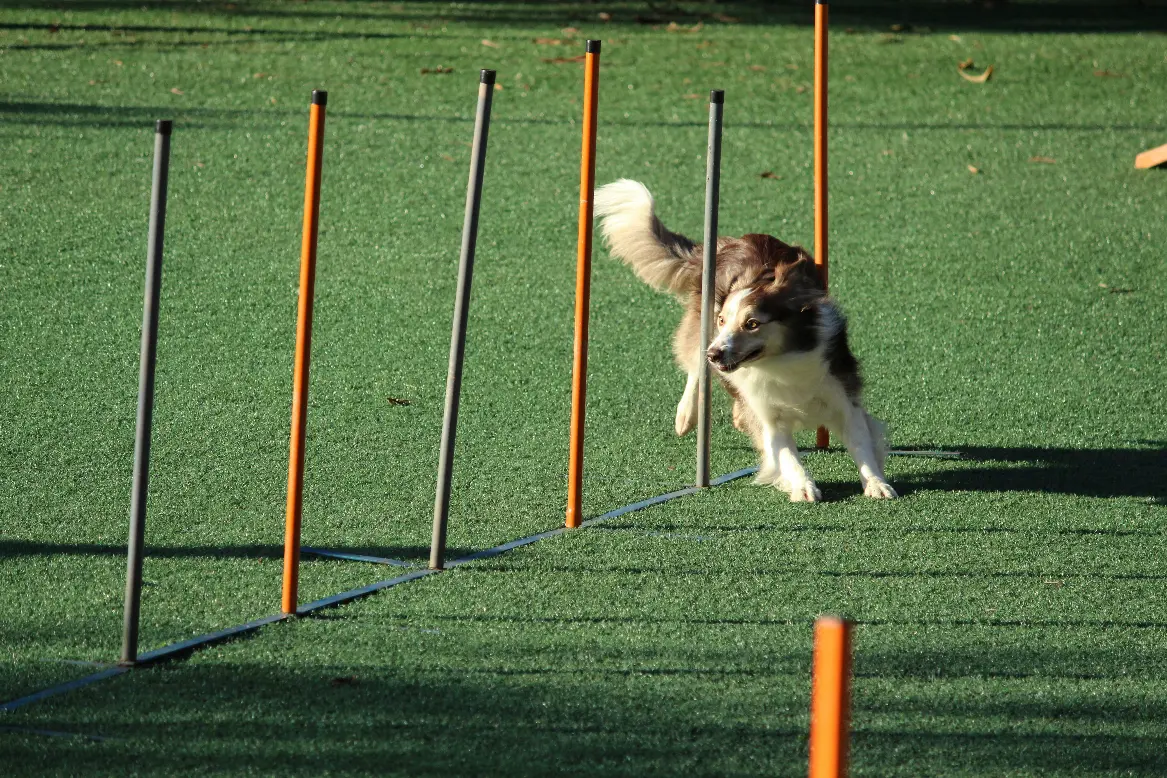
Agility weave poles training for dogs is one of the toughest skills in canine sports. Weave poles test a dog’s coordination, focus, and speed. Unlike jumps or tunnels, weaving asks a dog to think while moving fast. That combination makes it the most technical obstacle on any agility course.
Many dog owners want to build a strong foundation before entering competition. This guide walks through every stage of agility weave poles training for dogs, from choosing equipment to correcting common mistakes. Whether you own a Border Collie, a Labrador, or a mixed breed, the same core principles apply.
If your dog already enjoys other canine sports, weave poles are a natural next step. You might also enjoy our guide on dock diving training tips for dogs if your pup loves high-energy challenges.
What Is Agility Weave Poles Training?
Weave poles are a row of upright poles, usually twelve, spaced in a straight line. The dog must enter from the right side of the first pole and weave through each one in sequence. This obstacle mimics slalom skiing but on four legs.
Standard poles stand about three feet tall and are spaced twenty to twenty-four inches apart, according to AKC agility regulations. Handlers use verbal cues, hand signals, and body position to guide the dog through cleanly. Missing a pole, called a “skip,” results in a fault during competition.
Weave poles appear in almost every agility trial, including AKC, USDAA, and NADAC events. Because of this, agility weave poles training for dogs is considered a core skill, not an optional add-on.
Why Agility Weave Poles Training Matters for Dogs
Physical Benefits of Weave Pole Training
Weaving works muscles that jumps and tunnels do not reach. The rapid side-to-side motion strengthens a dog’s core, spine, and hind legs. It also improves balance and proprioception, or body awareness in space.
Dogs that train weave poles regularly often show better overall coordination. This carries over to other obstacles on the course. Strong core muscles also reduce injury risk during high-speed turns and sharp direction changes.
Weave pole work also improves cardiovascular fitness. Short, repeated bursts of movement raise heart rate quickly. Over time, this builds stamina that helps your dog perform better across a full agility course, not just on one obstacle.
Regular weave practice can also improve a dog’s flexibility. The twisting motion gently stretches the spine with every pass. Many trainers view weave poles as one of the best conditioning tools available in canine agility.
Mental and Behavioral Benefits
Weave poles demand intense focus from a dog. The obstacle forces the brain and body to work together in a tight rhythm. This mental engagement can reduce boredom-driven behaviors at home, such as chewing or excessive barking.
Dogs that get enough mental stimulation tend to be calmer overall. If your dog struggles with restlessness, our article on how dogs help reduce stress and anxiety explores this connection further. Agility training, including weave poles, is often part of that solution.
Agility Weave Poles Training Equipment
Channel Weave Poles
Channel weave poles split into two rows that form a gap, or channel, down the middle. The dog runs straight through the channel at first. Trainers gradually close the gap until the poles form a single line.
This method suits visual learners and high-drive dogs. It also allows for faster early speed since there is no actual weaving motion required at the start of training.
Channel poles are popular in group classes because several dogs can progress at their own pace. The equipment is also adjustable, so one set of poles can serve beginner and advanced dogs alike within the same training space.
Straight (2×2) Weave Poles
The 2×2 method starts with just two poles set at an angle. The dog learns to enter and weave through this small set before poles are added one pair at a time. This method builds precise entries and independent weaving.
Many professional handlers prefer 2×2 training because it isolates the entry skill early. Dogs trained this way often develop more reliable performance under competition pressure and distraction.
Because 2×2 poles are lightweight and portable, they work well for home training too. Owners with limited yard space often choose this method since only two poles are needed to begin building the foundation skill.
Agility Weave Poles Training for Dogs: Step-by-Step Method
Step 1 – Introducing the Poles
Start with just two or three poles spaced wider than normal. Use treats or a toy to lure your dog through the gap. Reward every successful pass, even if it is not perfect weaving yet.
Keep sessions short at this stage. Five to ten minutes per session is plenty for a new dog just learning the pattern.
Step 2 – Channel Method Training
If using channel poles, begin with the gap fully open. Send your dog straight through while running alongside. Slowly narrow the channel over several sessions, no more than an inch or two at a time.
Watch your dog’s confidence closely. If speed drops or hesitation appears, widen the channel again before continuing forward with training.
Step 3 – 2×2 Method Training
Set two poles at a slight angle and reward entries from the correct side. Once your dog reliably enters and weaves through two poles, add a second pair a few feet away. Repeat until your dog links all pairs together.
This step-by-step approach to agility weave poles training for dogs builds muscle memory gradually. Rushing ahead often creates entry problems that are hard to fix later in competition.
Building Independent Weaving
Independent weaving means your dog completes the poles without you running alongside. Start adding distance between you and your dog once the poles sit close together. Reward heavily for maintaining weaving speed and form without your physical guidance.
This skill becomes essential in competition, where handlers must move ahead toward the next obstacle. A dog with strong independent weaving keeps pace even when the handler is several feet away.
Common Agility Weave Poles Training Mistakes
Rushing the Process
Many handlers add poles too quickly. This often causes dogs to develop poor entries or start skipping poles under pressure. Slow, methodical progress produces far more reliable results over time and fewer faults in the ring.
Poor Pole Spacing
Incorrect spacing between poles confuses dogs and disrupts their natural rhythm. Always measure spacing according to your training method’s guidelines. Inconsistent spacing between practice sessions also slows down learning significantly.
Skipping the reward step is another common error. Some handlers wait too long between the dog’s success and the treat. Reward timing matters just as much as spacing when reinforcing correct weaving behavior.
Training on the same surface every time can also limit progress. Practicing on grass, then rubber matting, then concrete helps your dog generalize the skill. This prepares them for different competition venues and flooring types.
Essential Gear for Agility Weave Poles Training
Choosing the Right Rewards and Treats
High-value treats keep motivation strong during repetitive drills. Small, soft treats work best since they do not interrupt training flow. Our guide on how to choose the right dog food can help you pick nutritious options for everyday meals and training rewards alike.
Harness vs Collar During Training
Some handlers use a harness during warm-up walks to protect the neck and throat. During actual weave pole runs, most competitors use a flat collar or go collar-free for safety. Read our comparison of best dog harness vs collar to decide what fits your training routine best.
Agility Weave Poles Training Safety Tips
Warm-Up and Joint Care
Always warm up your dog with a short walk or light jogging before drills. Cold muscles are more prone to strain during quick lateral movements. Cool-down stretches afterward also help prevent stiffness the next day.
Avoiding Overtraining
Limit weave pole sessions to a few short bouts per week, especially for young or senior dogs. Overtraining can lead to joint stress and mental burnout over time. Watch for signs of fatigue, like slowing speed or reluctance to start.
Keeping your dog’s nails trimmed also matters for safe footing on poles. Long nails can affect grip and increase slip risk during fast turns. A quality pair of dog nail clippers makes this simple maintenance task easy to do at home.
Which Dogs Excel at Weave Pole Agility?
Herding breeds like Border Collies and Australian Shepherds often excel at weave poles due to natural agility and focus. However, almost any healthy dog can learn this skill with patience. Breed traits matter less than consistent training and motivation. Our types of dogs guide breaks down common traits across popular breeds so you can match training style to your dog’s natural drive.
Dogs already active in other sports, like freestyle flying disc training, often transfer well to weave poles. The coordination built in one sport frequently supports success in another, making agility weave poles training for dogs easier over time.
Frequently Asked Questions
How Long Does It Take to Train Weave Poles?
Most dogs need eight to twelve weeks of consistent practice to master weave poles reliably. Timing varies based on breed, age, and training frequency. Some dogs progress faster with daily short sessions instead of long weekly ones.
What Age Can a Puppy Start Weave Pole Training?
Puppies can begin foundation games, like the 2×2 method, around six months old. Full-speed weaving should wait until growth plates close, usually around twelve to eighteen months depending on breed size.
Do I Need a Professional Trainer for Weave Poles?
A professional trainer is not required, but guidance can speed up progress and prevent bad habits. Many owners successfully train weave poles at home using online resources and patience.
Final Thoughts on Agility Weave Poles Training for Dogs
Agility weave poles training for dogs takes patience, consistency, and the right method. Whether you choose the channel or 2×2 approach, gradual progress always wins. Celebrate small victories and keep sessions fun for your dog.
With time, your dog can master this challenging obstacle and enjoy the mental and physical benefits it brings. Explore more of our dog sports guides, including fetch it competition training tips and dog surf competition training, to keep building your dog’s skill set.