If your dog burns through energy fast or you simply want a diet built on real nutrition, high protein dog foods from Purina are worth a close look. Purina has spent decades studying canine nutrition, and its higher-protein formulas are designed to support lean muscle, steady energy, and overall vitality. This guide walks through why protein matters, which Purina formulas stand out, and how to pick the right one for your dog’s age, breed, and activity level.
Protein is not just a filler ingredient on a dog food label. It builds and repairs muscle tissue, supports a healthy immune system, and keeps skin and coat in good condition. Dogs that play, run, or work throughout the day need more of it than a couch-loving companion. That is exactly where Purina’s higher-protein recipes fit into the picture, offering formulas tailored to different lifestyles and life stages.
Why High Protein Dog Foods from Purina Matter for Your Dog’s Health
Every cell in your dog’s body relies on protein. It supplies the amino acids needed for muscle growth, hormone production, and tissue repair. A diet that falls short on protein can leave a dog with a dull coat, low energy, or slower recovery after exercise.
Purina formulates its higher-protein recipes with quality sources like chicken, salmon, and beef. These ingredients are chosen for digestibility, meaning your dog absorbs more of the nutrients instead of losing them as waste. If you want a deeper breakdown of how much protein your dog actually needs, this guide on how much protein should be in your dog’s food explains the numbers by life stage.
Higher protein content also helps dogs feel fuller for longer. This can be useful for owners managing weight or trying to reduce excessive begging between meals. A well-balanced formula pairs protein with healthy fats and fiber so the diet stays complete rather than one-dimensional.
Understanding Protein Needs Across Life Stages
Not every dog needs the same amount of protein. Age, breed size, and activity level all change the equation. Purina builds separate formulas for these different needs rather than using a single blanket recipe.
Puppies and Growing Dogs
Puppies grow fast, and their bodies demand more protein per pound of body weight than adult dogs. Purina’s puppy formulas typically include DHA for brain development alongside elevated protein levels for muscle and bone growth. Skipping this stage-specific nutrition can slow healthy development.
Adult and Senior Dogs
Adult dogs need enough protein to maintain muscle mass without excess calories that lead to weight gain. Senior dogs benefit from moderate-to-high protein diets too, since aging muscles need support to avoid frailty. Many pet owners assume older dogs should eat less protein, but current veterinary guidance often points the other way for healthy seniors.
Top High Protein Dog Foods from Purina to Consider
Purina offers several product lines built around higher protein content. Each one targets a slightly different type of dog owner and lifestyle.
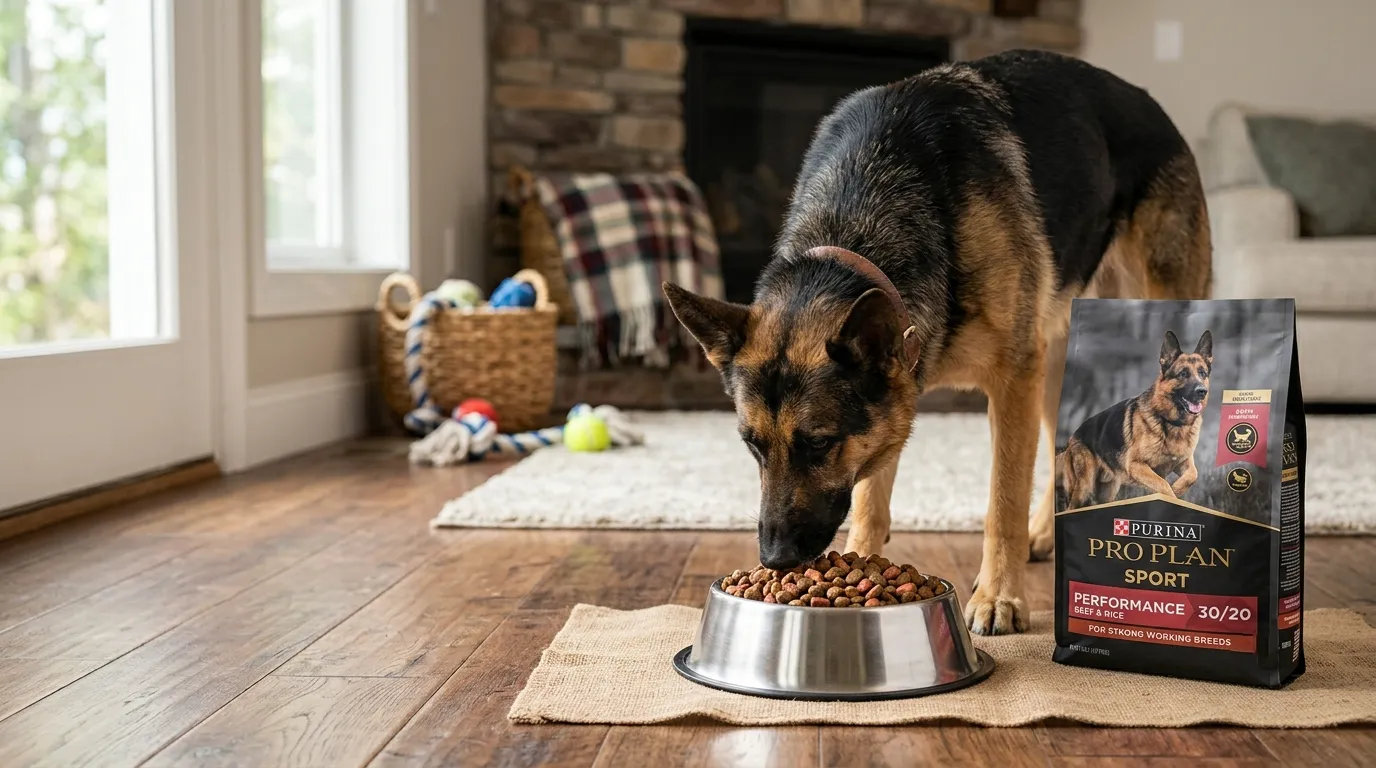
Purina Pro Plan Sport is formulated for highly active dogs, including working and sporting breeds. It typically includes around 30 percent protein along with added fat for sustained energy during long activity sessions.
Purina Pro Plan True Nature focuses on simple, natural ingredient lists with real meat as the primary source. This line appeals to owners who want fewer fillers and a shorter ingredient panel without sacrificing protein content.
Purina ONE SmartBlend True Instinct blends real meat with added vitamins and minerals. It sits in the mid-to-premium range and works well for adult dogs that need a protein boost without a dramatic diet change.
Purina Pro Plan Sport for Active Dogs
Dogs that compete in agility, hunt, or spend hours outdoors benefit from the higher fat and protein ratio in this formula. It is built to support sustained energy rather than a quick spike followed by a crash.
Purina Pro Plan True Nature for Natural Diets
Owners who scrutinize ingredient labels often gravitate toward this line. It leans on real meat, whole grains, and recognizable ingredients, which tends to align with what many people look for when they research dog food with real meat as the first ingredient.
Key Ingredients Found in High Protein Purina Formulas
Understanding what goes into these formulas helps you compare labels with more confidence. Purina typically leans on a mix of whole meat, meat meals, and supporting nutrients.
Real Meat as the First Ingredient
Many Purina high protein recipes list a named meat, such as chicken or salmon, as the very first ingredient. This signals that the recipe is built around animal protein rather than plant-based fillers. Fresh meat also contributes moisture and natural flavor that dogs tend to prefer.
Chicken Meal and Other Protein Concentrates
Some formulas use chicken meal instead of, or alongside, fresh chicken. Meal is a concentrated protein source because the water has already been removed during processing. If the term is unfamiliar, this explainer on what is chicken meal in dog food breaks down why it is not something to avoid.
Benefits of Choosing High Protein Dog Foods from Purina
A protein-forward diet supports more than muscle. It plays a role in nearly every system in a dog’s body, and choosing a trusted brand adds an extra layer of consistency.
Dogs on these formulas often show improved coat shine within a few weeks. Their energy tends to stay steadier throughout the day instead of spiking after meals and crashing later. Lean muscle maintenance also becomes easier, particularly for working and sporting breeds that lose condition quickly on lower-protein diets.
A few practical benefits stand out most often among pet owners:
- Better satiety, which can reduce begging and snacking between meals.
- Support for lean muscle in active or aging dogs.
- Consistent sourcing and quality control from an established manufacturer.
How to Choose the Right High Protein Formula for Your Dog
Picking the right formula is not about grabbing the recipe with the highest percentage on the bag. It is about matching the food to your dog’s actual needs.
Consider Activity Level
A working breed that runs for hours needs a different ratio than a small companion dog that mostly naps. Match the protein and fat content to how much energy your dog actually burns in a typical day. Overfeeding a high-calorie, high-protein formula to a low-activity dog can lead to unwanted weight gain.
Check for Sensitive Stomachs
Some dogs react poorly to a sudden jump in protein or to specific protein sources. If your dog has a history of digestive upset, it helps to review options built for gentler digestion, like those covered in this guide to dog food for sensitive stomachs, before committing to a higher-protein formula.
It also helps to compare Purina’s offerings against other reputable brands before making a final decision. This dog food comparison guide for pet owners lays out useful criteria for judging quality across brands, not just protein numbers.
Potential Concerns with High Protein Diets
These formulas are generally safe for healthy dogs, but a few situations call for extra caution. Dogs with certain kidney conditions may need a vet-guided protein limit, since damaged kidneys process protein waste less efficiently.
It is worth checking with a veterinarian before switching an older dog or one with an existing health condition to a significantly higher-protein diet. Healthy dogs rarely have trouble processing extra protein, but individual medical history always matters more than general guidelines.
Overfeeding is another consideration. A high-protein formula is often more calorie-dense, so portion sizes may need adjusting compared to a standard maintenance diet. Following the feeding chart on the bag is a reasonable starting point, then adjusting based on your dog’s body condition.
Tips for Transitioning Your Dog to High Protein Dog Foods from Purina
Switching foods abruptly can upset a dog’s digestive system, regardless of how good the new formula is. A gradual transition over seven to ten days tends to work best.
Start by mixing about 25 percent new food with 75 percent old food for the first couple of days. Slowly shift the ratio every two to three days until the bowl contains only the new formula. Watching stool consistency and energy levels during this period helps confirm the switch is going smoothly.
For dogs new to any elevated protein diet, it also helps to review broader feeding fundamentals. This resource on how to choose the right dog food covers label reading and ingredient priorities that apply well beyond just protein content.
Frequently Asked Questions about High Protein Dog Foods from Purina
Is more protein always better for dogs?
Not necessarily. More protein helps active dogs, but sedentary dogs may not need the extra calories that typically come with it.
What percentage counts as high protein in dog food?
Formulas around 28 to 32 percent protein on a dry matter basis are generally considered high protein for adult maintenance diets.
Can puppies eat high protein Purina formulas?
Yes, but they should eat formulas specifically labeled for puppies, since growth-stage nutrition differs from adult maintenance needs.
Are Purina high protein formulas grain-free?
Not all of them. Purina offers both grain-inclusive and grain-free lines, so check the specific product label for details.
According to AAFCO, the organization that sets pet food nutrient standards in the United States, adult dog foods must meet a minimum protein threshold to be labeled complete and balanced, and Purina’s high protein lines exceed that baseline by a meaningful margin. You can review the official nutrient profiles directly on the AAFCO website if you want to compare standards yourself. For full ingredient lists and current formulations, Purina’s own product pages on purina.com are the most reliable source, since recipes occasionally change.
Final Thoughts on High Protein Dog Foods from Purina
Choosing the right food comes down to matching your dog’s real needs with a formula built on quality ingredients. High protein dog foods from Purina give owners a dependable, well-researched option, whether the goal is supporting an active working breed or simply improving coat and energy in an everyday companion dog.
Take time to read the label, consider your dog’s activity level, and transition gradually to any new formula. A little extra attention during the switch pays off in better digestion and a smoother adjustment period for your dog.