How to Choose the Right Dog Food (Complete Guide)
Choosing the right dog food can feel confusing, especially with so many brands and options available in the market.
Every product claims to be the best, but not all dog foods provide the same level of nutrition, quality, and digestibility. The truth is, the right food depends on your dog’s specific needs, not just the brand name or price.
A proper diet plays a major role in your dog’s overall health. It affects energy levels, digestion, coat quality, and even behavior.
When you choose the right dog food, you are not just feeding your pet, you are investing in their long-term health and happiness. This guide will help you understand what really matters so you can make the best decision with confidence.
Why Choosing the Right Dog Food Matters
Dog food is the foundation of your pet’s health. Poor-quality food can lead to digestive issues, allergies, low energy, and long-term health problems. On the other hand, a well-balanced diet supports strong immunity, healthy skin, and proper growth.
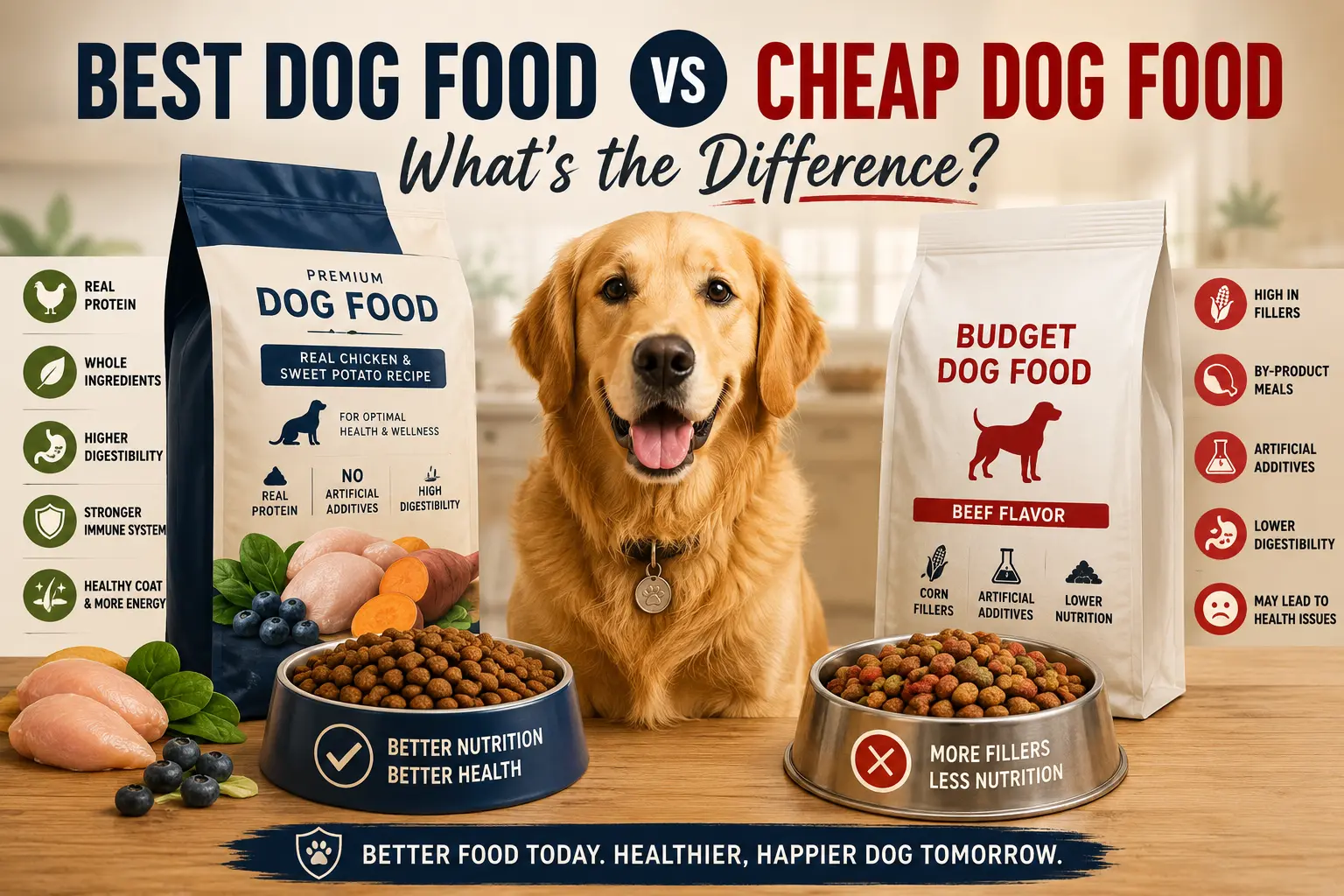
Many pet owners only focus on price or brand popularity, but that approach often leads to poor choices. What truly matters is the ingredient quality, nutritional balance, and how well your dog can digest the food. A good diet should meet your dog’s daily needs without causing discomfort or health issues.
Understanding Your Dog’s Nutritional Needs
Every dog is different, and their food should match their age, size, and activity level. A puppy has very different nutritional requirements compared to an adult or senior dog. Similarly, active dogs need more energy, while less active dogs require controlled calorie intake.
Protein is the most important part of a dog’s diet, as it supports muscle growth and repair. Fats provide energy and help maintain a healthy coat, while carbohydrates offer additional fuel for daily activities. Vitamins and minerals support overall body functions, including immunity and bone health.
How to Read Dog Food Labels Correctly
Understanding dog food labels is one of the most important steps in choosing the right product. Many labels use marketing terms that can be misleading, so you need to focus on the actual ingredient list and nutritional information.
Look for Real Meat as the First Ingredient
The first ingredient should always be a real protein source such as chicken, beef, or salmon. This indicates that the food contains a good amount of high-quality protein.
Check the Ingredient List Carefully
Short and simple ingredient lists are usually better. Avoid foods with too many fillers or artificial additives. Ingredients like rice, oats, and sweet potatoes are generally easier to digest.
Understand Additives and Preservatives
Natural preservatives and added nutrients are fine, but artificial colors, flavors, and chemicals should be avoided. These can cause allergies and digestive issues in some dogs.
Types of Dog Food Explained
There are different types of dog food available, and each has its own benefits depending on your dog’s needs.
Dry Dog Food (Kibble)
Dry food is the most common option because it is affordable, easy to store, and supports dental health. High-quality kibble can provide balanced nutrition if it includes the right ingredients.
Wet Dog Food
Wet food contains more moisture, which makes it easier to digest and more appealing for picky eaters. It is a good option for dogs with dental issues or low appetite.
Raw and Fresh Dog Food
Raw or fresh food diets are becoming popular, but they require careful planning to ensure proper nutrition. They can be beneficial but are not always practical for every dog owner.
Choosing Based on Your Dog’s Condition
Your dog’s health condition plays a major role in selecting the right food.
Sensitive Stomach
Dogs with digestive issues need easily digestible food with simple ingredients and added probiotics. These help improve gut health and reduce irritation.
Skin Allergies
For dogs with itchy skin or allergies, choose food with limited ingredients and avoid common allergens like artificial additives.
Weight Management
Overweight dogs need low-calorie food with high protein to maintain muscle while reducing fat. Portion control is also very important.
How to Switch Dog Food Safely
Changing your dog’s food suddenly can lead to stomach upset. A gradual transition is always the best approach.
Start by mixing a small amount of the new food with the old one. Slowly increase the new food over 7 to 10 days. This allows your dog’s digestive system to adjust without causing problems.
Common Mistakes to Avoid
Many dog owners make the mistake of choosing food based only on price or brand reputation. This can lead to poor nutrition and health issues over time.
Another common mistake is ignoring your dog’s individual needs. What works for one dog may not work for another. It is important to observe your dog’s reaction to food and make adjustments if needed.
Signs You Chose the Right Dog Food
When you choose the right food, your dog’s overall condition will improve. You may notice better energy levels, a shinier coat, and healthy digestion.
Regular bowel movements, reduced itching, and consistent appetite are also signs that the food is working well for your dog.
Final Thoughts
Choosing the right dog food is one of the most important decisions you can make as a pet owner. The right diet supports your dog’s health, improves quality of life, and prevents many common problems.
Focus on your dog’s specific needs, choose high-quality ingredients, and make changes carefully. With the right approach, you can ensure your dog stays healthy, active, and happy for years to come.